Solar Plexus Chakra (Manipura): Yoga Poses & Practices
Third chakra · Element: fire · Seed sound: Ram
Manipura, the solar plexus chakra, is the third of the seven chakras and the theme of inner fire, confidence and will. Explore five yoga practices built around it, from steady Hatha to a short seated meditation.

Seven centres
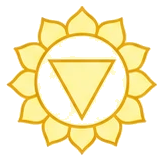
Solar Plexus · Igniting
Manipura
Confidence, willpower, and the energy to act.
Solar Plexus chakra yoga practices
Steady heat. Core work, standing twists, and warriors, then a full rest. Good for all levels.
The most heat in the series. Sun Salutations, twisting lunges, and a peak with Side Plank and Crow. Best if you’re comfortable with vinyasa.
Warmth without strain. Gentle core work, easy twists, and a long rest. Good for beginners.
Long, quiet holds that rest the belly and open the front of the body. Good for all levels.
Ten minutes seated with the breath, sun imagery, and the sound Ram. Good for all levels.
What is the solar plexus chakra?
The solar plexus chakra is the third of the seven chakras, pictured in the upper belly, around the navel. Its Sanskrit name, Manipura, means “city of jewels.” Traditional texts link it with fire and picture it as a ten-petalled lotus around a red triangle. In modern practice, its colour is yellow.
What can the solar plexus chakra bring to your life?
In modern chakra teaching, the solar plexus chakra is linked with energy, will, confidence, and action — qualities that echo its element, fire. It’s about the steady warmth that gets you moving, not the heat that burns you out.
Practising with this theme won’t change your life on its own. It gives your practice a focus: a chance to notice where your energy goes, how it feels to make a choice and follow through, and when effort helps and when it’s too much. Some days you’ll find a strong fire. Other days the practice is to tend a small one, and that counts too.
How the Solar Plexus practices explore it
Every Solar Plexus practice works from the centre of the body. Core work builds steady strength, twists turn through the middle of the body, and standing poses build heat from the inside out. Each practice ends by cooling the fire, so you leave warm rather than drained. Choose the practice that suits your day: steady Hatha, fiery Power, warming Gentle, cooling Yin, or a short seated Meditation.
Your intention: Where do I want to put my energy today?
The sound of the solar plexus: Each practice begins with the option to chant Ram (“rum”), the solar plexus bija mantra, softly three times — or simply listen.
Key poses for the solar plexus chakra
These poses appear across the Solar Plexus practices. Each one builds steady heat and strength through the core.
- Chair Twist (Parivrtta Utkatasana)
- Warrior III (Virabhadrasana III)
- Boat (Navasana)
- Revolved Low Lunge (Parivrtta Anjaneyasana)
- Half Lord of the Fishes (Ardha Matsyendrasana)
- Bird Dog (Dandayamana Bharmanasana)
- Plank (Phalakasana)
Off the mat
- Choose one small task you’ve been putting off, and finish it.
- Notice when your energy is high and low during the day, and plan one thing around it.
- Give a clear yes or no to one request this week.
Questions to sit with
- What gives me energy, and what drains it?
- Where do I hold back when I could act?
- Where do I push when I could rest?
Sources
- The Real Story on the Chakras, Christopher Wallis — a scholar’s readable history of the chakras
- A Beginner’s Guide to Chakras, Sandra Anderson — a clear introduction from Yoga International
- Manipura Chakra: Navel Center, Sandra Anderson — a short introduction to the third chakra and its element, fire
- The Serpent Power, Arthur Avalon (trans.) — the classic translation of the 16th-century text that describes the chakras
- Yoga: Effectiveness and Safety, National Center for Complementary and Integrative Health — what research says about yoga