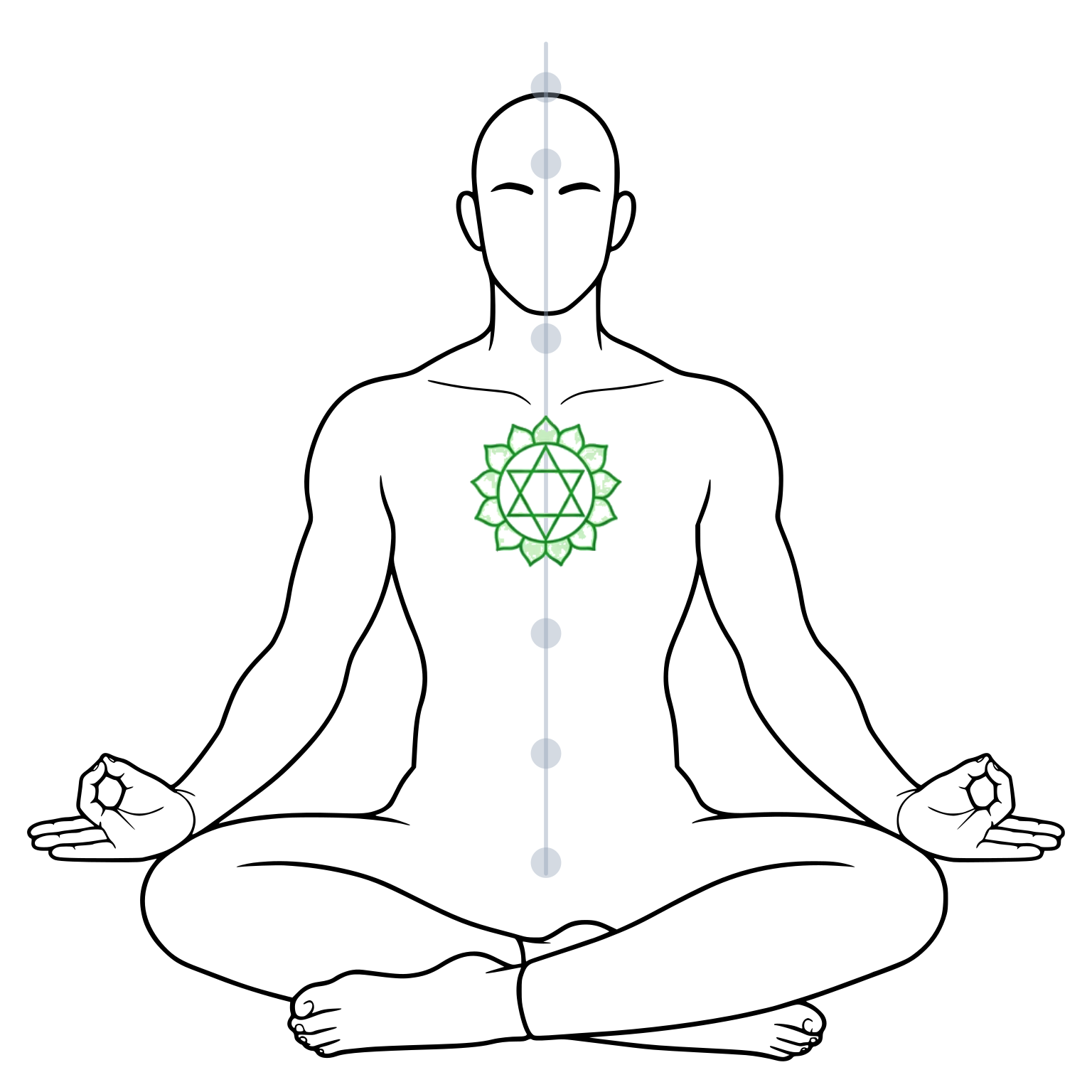
Heart chakra yoga poses open the chest, shoulders and upper back, and make room for the breath. But how you order them matters too. Thoughtful sequencing helps a class feel open and steady rather than strained. This guide walks through seven key poses, how to sequence them, and a short meditation to finish.
The heart chakra, Anahata, is the fourth of the seven chakras, pictured at the centre of the chest and linked in the traditional texts with air. For its meaning, symbol and sources, see our Heart chakra guide →.
Seven heart chakra yoga poses
Puppy Pose (Uttana Shishosana). Hips over knees, chest melting toward the floor. A soft first opening for the shoulders, and a good test of how much opening the body wants today.
Thread the Needle (Urdhva Mukha Pasasana). Releases the back of the shoulder and the upper back. Anahata yoga isn’t only about the front of the chest. The back of the heart needs space too.
Sphinx (Salamba Bhujangasana). The gentlest backbend. Elbows under the shoulders, broad across the collarbones. It teaches students to lift from the upper back before they go deeper.
Dancer (Natarajasana). A standing backbend with balance. Kicking into the hand lifts the chest. A hand on the wall is part of the practice, not a shortcut.
Camel (Ustrasana). The deepest opening in most heart classes. Hands on the low back are a full choice. Lift the chest first, then lean back only as far as the breath stays easy.
Cow Face (Gomukhasana). Opens the shoulders from a seated position. A strap between the hands makes it work for almost everyone.
Supported Fish (Salamba Matsyasana). A block or bolster lifts the chest while the body rests. After the active backbends, this is where the opening settles in.
How to sequence an anahata yoga class
A few principles help:
- Start with the shoulders, not the spine. Cat–Cow, Thread the Needle and Puppy warm the area before you ask it to bend.
- Build a steady base. Lunges and standing poses come before deep backbends. An open front needs a strong back.
- Build backbends step by step: Sphinx, then Locust, then Camel. Don’t skip ahead, and stop at the step where the breath stays smooth.
- Bring the spine back to neutral. After backbends, add a twist or Knees to Chest before anything else.
- End supported. Supported Fish and a long rest let the opening settle without effort.
If you’d like this ready-made, our Heart chakra series has five complete practices built on this arc: Hatha 60, Power 45 (peaking in Dancer, Camel and Wheel), Gentle 30, Yin 45 and a 10-minute meditation.
A short heart chakra meditation
Sit comfortably and rest a hand on your chest. Feel the ribs widen as you breathe in, front, sides and back, and soften as you breathe out.
Picture open air around you: a wide sky, a light breeze. With each inhale, let the space around your heart widen a little: first to include someone you care about, then the people around you today. No need to feel anything special. Just make room.
If you like, finish by saying Yam (pronounced “yum”), the heart chakra’s seed sound, once on an exhale.
Teaching tips
- Offer full options, not steps down. Bridge is a complete choice in place of Wheel, and hands on the low back are a complete choice in Camel.
- Watch the neck and low back. Keep the chin slightly tucked in Camel, and keep the bend in the upper back.
- Keep the language open. The heart chakra is a yoga tradition, not the physical heart, so make no claims about heart health. Chest-opening poses can stir feelings. Let them be, without promising an emotional release.
Every SomaAxis Heart practice includes teacher notes: an opening and closing script, cues at key poses, and class notes for setup and safety.
Explore the Heart chakra practices →
Free 8-day trial, then save any practice to My Sequences.
Part of our seven-chakra series. Explore all seven chakras →