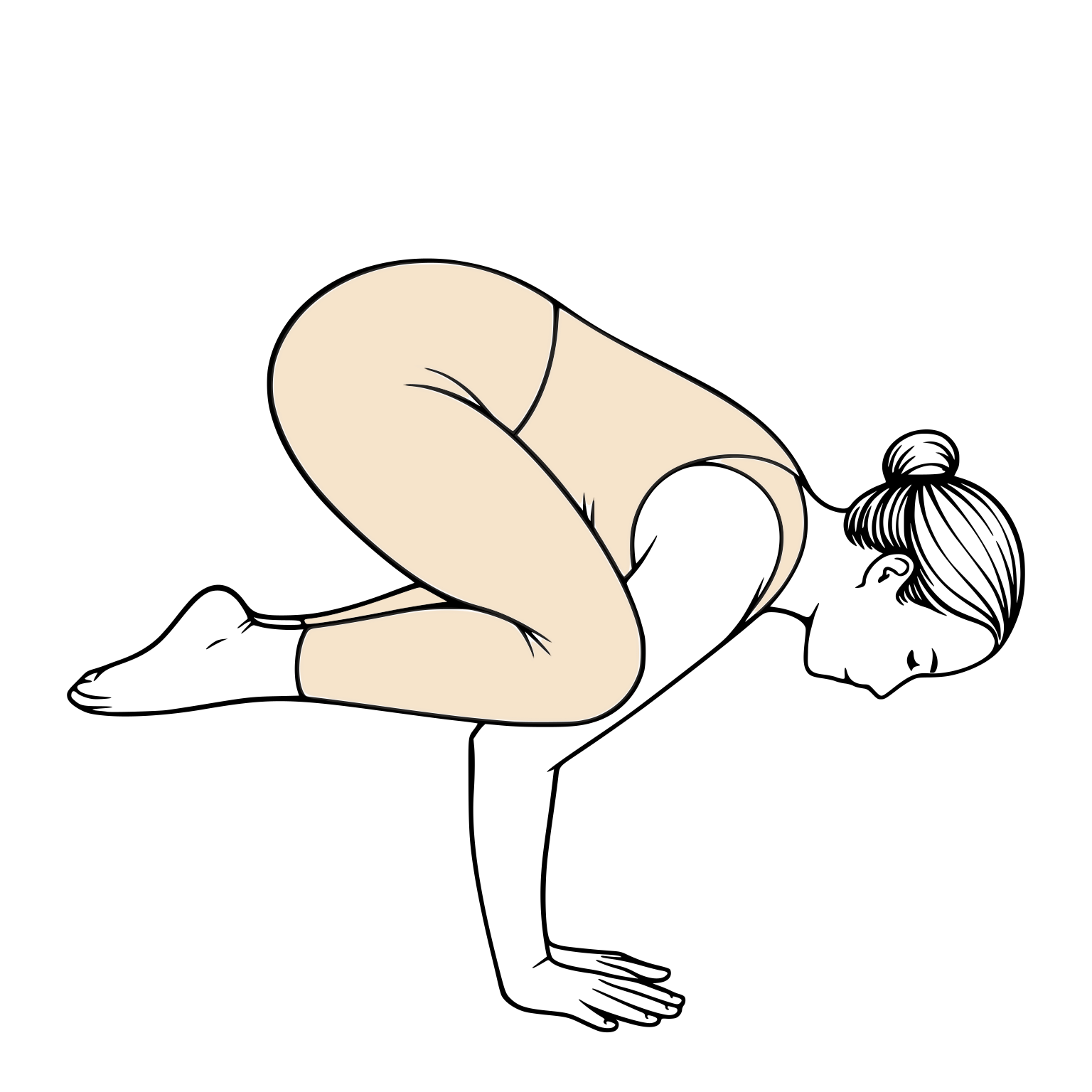
Power yoga is one of the most-searched yoga styles in Canada, and many of those searches come from people looking for a class near them.
I looked at five years of Google Trends data for Canada, comparing five styles: power, yin, hatha, vinyasa and somatic yoga. Power and yin came out ahead, with hatha third and vinyasa well behind. Somatic yoga, which gets a lot of attention online right now, came last. When I looked closer at the power yoga searches, many included a studio name or a city. People aren’t only curious about power yoga. They’re looking for somewhere to practise it.
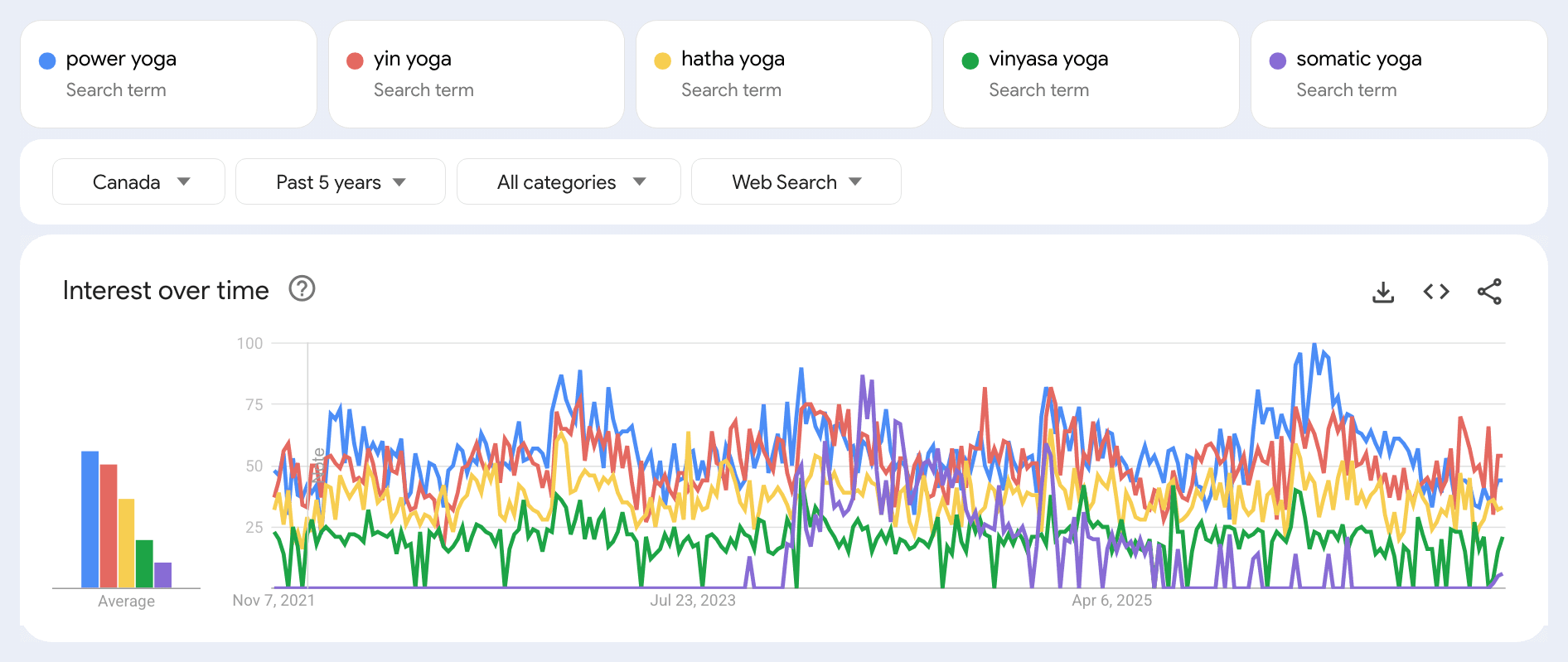
Search interest isn’t the same as class attendance. But it does tell us what people are curious about, and Canadians keep looking for a strong, sweaty, breath-led practice.
What makes a class “power yoga”
Power yoga is a vigorous, vinyasa-based practice. It builds heat through repetition and steady breath, and it doesn’t follow a fixed series the way Ashtanga does. That freedom is what makes it fun to teach, and also what makes it hard to plan. A good power class needs:
- A long plateau, not one peak: a hatha class often builds toward a single peak. Power yoga reaches high intensity sooner and stays there longer, across several sections, before it comes down.
- Smart repetition: students repeat a flow enough to settle into it, then you add one new element.
- Peaks that build on each other: each high-intensity section has its own peak and prepares the body for the next, so the hardest poses come when students are warmest.
- A real cool-down: after that much heat, students need time to come down before savasana.
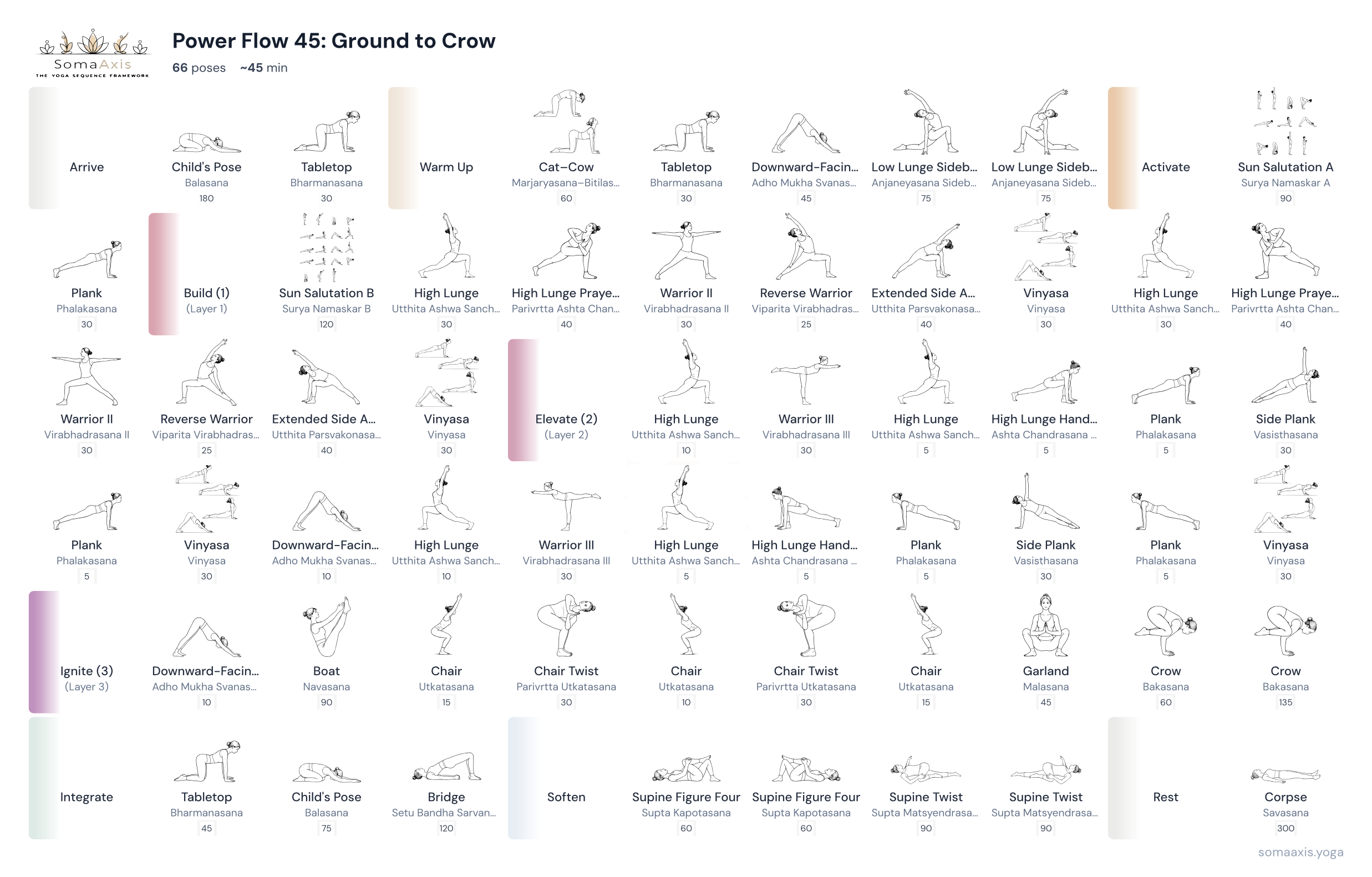
Your free class: Power Flow 45 — Ground to Crow
I built this 45-minute class from the way I teach power yoga. It moves through nine sections: Arrive, Warm Up, Activate, Build, Elevate, Ignite, Integrate, Soften and Rest. Build, Elevate and Ignite each reach their own peak, finishing with crow pose. Teach it as it is, or adapt it for your students.
Props: 1 block.
Want the printable PDF?
Leave your name and email and I’ll send it to your inbox. You can also email [email protected].
Options: in place of the roll to a squat, place the hands down, step back to down dog, then walk the feet to the hands and rise to chair. In crow, lift one foot at a time, or stay in malasana.
Opening remarks
“Welcome. Today we’re building toward crow pose. It asks for strength, but mostly it asks for trust: trust in your hands, your core, and your breath. We’ll start grounded and build heat step by step. Whether you fly today or stay in the squat, every pose before it is the practice. Let’s begin in child’s pose.”
Cue at the peak
“Gaze forward, not down. Lean until your feet feel light. If you tip forward, you’ll land softly on your block.”
Closing remarks
“Whether you lifted off today or stayed grounded, you built the same strength, balance and focus that crow needs. That’s the practice. Take a moment to notice how your body feels now compared to when you arrived.”
Open Power Flow 45 in SomaAxis →
Edit it, change the timing and practise it in Practice Mode. Free 8-day trial, then save it to My Sequences.
Planning your own power classes
I built SomaAxis because planning classes took me longer than teaching them. It’s a sequence builder for yoga teachers: drag poses into place, see the timing, and save your classes so you never start from a blank page. Start your free 8-day trial →
Zora is a 200-hour certified yoga teacher (Karma Teachers, 2019) who teaches power yoga and other styles in Vancouver. She is also the founder of SomaAxis, a sequence builder for yoga teachers.